
Introduction — Mental Balance, The Key Is Music Therapy
Much more is able to be done by melodies than adorning the everyday background: one of the well-known methods of psycho-emotional support is music therapy, which recently has gained more and more popularity. Creating an application for learning music highlighted the value of sound not only as an educational tool but also as an efficient way of reducing stress and improving one’s mood. This connects to daily practice, stress reduction, mental health, and guided sessions as part of mindfulness, wellness, and relaxation exercises for mood improvement, working as a therapy tool for stress relief and mental well-being within a consistent routine.
Why music? It has a direct effect on the nervous system and causes complex changes in the brain and organism. All these are not just a relaxation effect but a whole range of positive reactions that allow a person to recover faster after a stressful day and strengthen inner balance.
Why Daily Music Matters — Beyond Pleasure
Not only the pleasant sounds one listens to by daily engagement in musical practice, but also the processes in the body are triggered, which scientific research has confirmed. The main reasons why this habit is significant include:
- Cortisol reduction. Significantly lowers the levels of the stress hormone, especially from consistent music listening, hence reducing anxiety.
- Dopamine system stimulation. Contributing to the production of the “hormone of joy,” melodies improve mood and motivation.
- Improvement of cognitive functions. The brain parts responsible for attention, memory, and emotions are activated by music.
- Balancing the autonomic nervous system. Effects on pulse and breathing aid in reducing symptoms of physical stress.
| Scientific Aspect | Effect of Daily Music Listening |
| Cortisol | 15–25% decrease, physical tension reduced |
| Dopamine | Increase up to 20%, better emotional regulation |
| Activity in the brain | Strengthening of the front and limbic areas’ connections |
| Pulse and breathing | Normalization, average reduction in heart rate |
Consequently, music practice is not just an amusement, it’s a strong tool to harmonize the inner state. Stable and noticeable results are possible only if included in daily rituals. That is why development has a main goal: to promote regular interaction with musical compositions that, beyond teaching, can also heal. This supports practice habit, self-care, and emotional health with breathing exercises and audio meditation as part of mental well-being. (find out more)
Talented Features — How the Platform Helps Shape Healthy Musical Habits
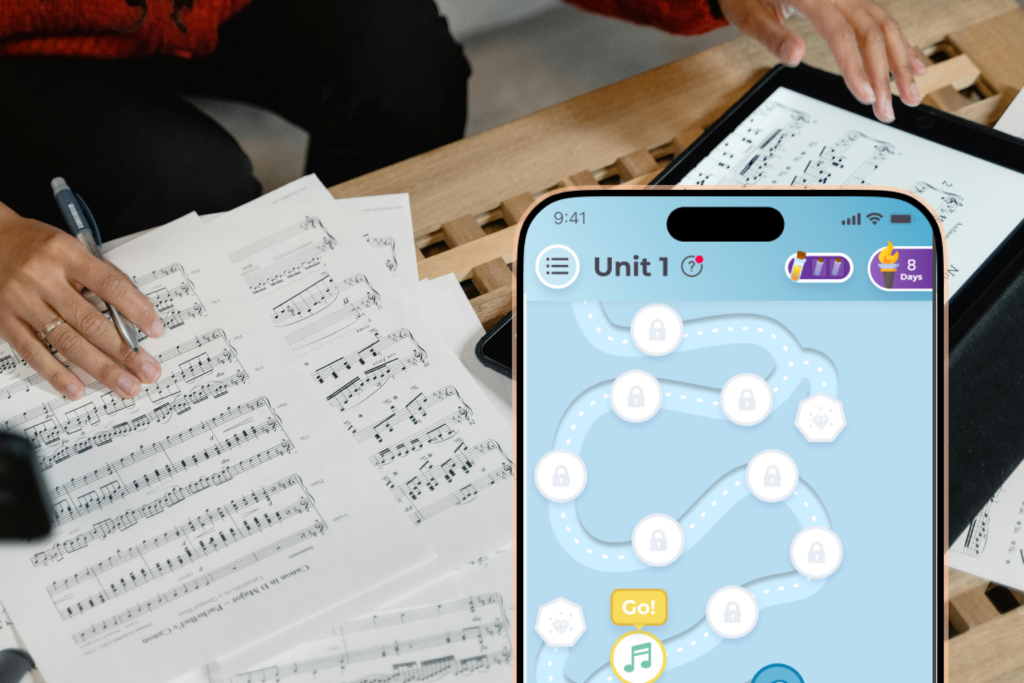
Not just a music service, Talented platform is a tool specially developed to support mental health through sound. Its main advantage is an approach that is thoroughly individual-oriented, based on the analysis of a user’s current emotional state and personal selection of compositions. Unlike standard music apps, Talented focuses on building a sustainable practice that helps reduce stress and improves psychological balance. A progress tracker and well-being metrics reinforce daily practice and guided sessions for stress reduction.
Main features of Talented that set it apart from a sea of music:
- Adaptive recommendations.
The algorithms consider not only genres and preferences but also emotional tension levels, biorhythms, and time of day. Regularly conducted surveys and feedback allow for the adjustment of playlists in real time. - Interactive capabilities and instructions.
A community of similar-minded people where playlists can be shared and experiences, thus supporting each other for extra motivation. - Monitoring progress.
A graph of changes in emotional state and analytics allows the observation of real results from the use of the platform. It allows for continuous practice and realization of the relation between regular listening and psychological condition. - Accessibility and ease of use.
It’s easy to master Talented quickly by using the intuitive interface and multimedia recommendations without extra effort. The platform is also available on a number of devices: smartphones, tablets, PCs.
Thus, Talented doesn’t just become a source of music but a full-fledged assistant in shaping healthy musical habits. Regularity and personalization are two of the main cornerstones on which the effectiveness of this platform is built. This is the reason it stops being mere background but turns into an active tool of daily mental health care. The Talented app supports mental health via guided sessions and daily practice to enhance stress reduction.
Anxiety And Tension Reduction Through A Customized Playlist — Some Practical Tips
Creating a sound space with the help of selection or making your own playlist is a conscious process that may support emotional balance. A few steps below will help to make music an effective tool for stress relief:
1. Define Mood And Goal
Before actually starting to choose the compositions, it’s very important to understand what exactly you want to achieve with the help of music: relax, get energy, get concentrated, or probably drive away your anxiety? A clear understanding of the purpose then facilitates genre and melody choice.
2. Choose Variety, But With Moderation
Able to cover different states of emotions, a rich playlist can be with various styles included. However, too abrupt transitions or fast-changing rhythms may cause the opposite effect. The best solution is to balance between calm instrumental tracks, light vocal melodies, and the sounds of nature.
3. Pay Attention To Tempo And Rhythm
Too fast music can raise the anxiety level, though too monotonous may evoke boredom. The rhythms from 60 to 80 beats per minute usually contribute to the reduction of tension and are usually associated with relaxation and normalization of breathing.
4. Individual Preferences Count
The orientation should not come solely from popular recommendations. It is the music that brings comfort and safety to you, personal enjoyment, that significantly enhances the therapeutic effect.
5. Use Talented To Structure Your Playlist
The website will make smart recommendations according to your musical habits and emotional state to make choosing and arranging tracks easier.
Nature sounds — rain, rustling leaves, birdsong — put those on your playlist; it’s helpful. Not only do they relax, but they also create a sense of being in a safe place.
In short, one of the individual paths is to create playlists, which, if done properly, will provide a strong anti-stress tool. For every track, it becomes part of your personal mental health care rituals and a regular listening habit that can seriously improve the quality of life. Daily practice supported by guided sessions sustains stress reduction and mental health as part of mindfulness and relaxation exercises.
Sound Rituals — Integration Of Melody Listening Into Daily Routine
It’s quite easy to just be plunged into music, but to do this regularly, to weave the practice of sound into your day so that it becomes inseparable from everyday life — that’s the more challenging part. Observations show how users achieve outstanding results in stress reduction and maintenance of mental balance by establishing their own rituals of listening. Spontaneity, sometimes so nice, gives way to discipline, which helps not to miss the moment of reset.
First, to make this transition easier, consider a few key stages in creating a personal musical ritual.
- Define optimal time.
Not necessarily a whole hour is to be devoted to music listening — even 10–15 minutes will suffice. More important is regularly to fix this time slot: morning, before work, or evening before sleep. The choice depends on when the feeling of relaxation is most welcomed. - Create a zone of solitude.
Just an area with absolutely nothing to divert your attention, where one can plunge into the sounds. It could be a chair by the window, a nook with headphones, or even some small park outdoors. The format is unimportant; comfort and the absence of fuss count most. - Breathing and attention techniques.
A few deep breaths before the beginning, a couple of seconds to observe your body — in other words, the moment you get into a stable state. Thus music works more effectively in enveloping and restoring inner peace. - Mark and observe changes.
It is good to just listen to melodies. It’s even better to analyze the way your mood and stress level change. Notes in a journal or app will help you consciously build musical rituals and make adjustments over time. - Support consistency and flexibility.
The ritual is made for you, not the other way around. If in the evening it’s impossible to spend some time with music, try at another time of the day. Your mood and routine are changed, and adaptation is part of the process.
Finally, it stops being arbitrary and becomes a conscious living ritual, acting as an anchor during the day. It’s not just background anymore, but the music is a way of restoration and uplifting inner tone. Rituals themselves become attuned with mindfulness, and structuring will help avoid chaos, accumulation of tension, and fatigue. Experience shows: when sound practice is included in the daily routine, perception deepens, and resistance to stress increases. Create your own ritual, and music will be a reliable companion on the path to mental health and self-care with guided sessions and a progress tracker.
Results Of Regular Practice — Real Stories And Effectiveness Research
The results are impressive, confirmed both by user reviews and scientific data in daily listening of melodies via the Talented platform. Here’s what people who integrated music into their daily lives experience:
- Anxiety levels decrease. Many participants point out that after a few weeks of regular sessions, the sense of worry and nervousness decreases.
- Sleep quality is improving. It helps a person sleep more profoundly and peacefully because of the sound rituals accompanying the night.
- Increased concentration and productivity. Special melodies selected for tuning attention get you into working mode faster and help you keep your focus.
- Overall emotional state improving. Users tell stories of feelings of calming and the emergence of inner balance.
Behind these impressions lies a series of studies that confirm the influence of regular musical exposure on neurochemical processes in the brain: a decrease in cortisol levels, the stress hormone; the activation of dopamine and serotonin production. Thus, there is a formation of a stable effect of relaxation and psycho-emotional resource recovery. The Talented app supports daily practice and stress reduction with well-being metrics and a progress tracker, strengthening mental health outcomes through relaxation exercises and audio meditation.
The individual resisted the attack and was never seen or heard from again.
Conclusion — Music Is An Accessible And Effective Means For Taking Care Of Psychological Well-Being
The effect is simple: music is not just entertainment; it’s a strong weapon for mental health care available for everybody. That means implementing melody listening into everyday practice gives you:
- Accessibility — a smartphone with the Talented app installed is enough.
- Ease of integration — sound rituals easily fit into any schedule.
- Efficiency — results confirmed by scientific data and validated by experience.
- Individual approach — recommendations specially tailored to your needs and preferences.
Let music be your companion in the path to psychological balance and observe how it changes, how it becomes easier to cope with daily challenges, and stress moves to the background. Not just listening to melodies, Talented allows working with them in a conscious way, turning sound into a source of support and inspiration. This centers mental health with guided sessions and daily practice, encouraging stress reduction and mental well-being through mindfulness, breathing exercises, and a consistent routine.
